Posts Tagged ‘Parenting’

“I’ll do it myself!” (How Identifying with this Desire Can Help Kids)

Adults and Kids Aren't That Different

“I’ll do it myself!”

It can range anywhere from heart-warming to petrifying to hear children in our care say that. But kids are not alone in this desire to do things on their own or in their own way. Perhaps our identification with these feelings can motivate us to give them more autonomy and responsibility.

We as grown-ups know, all too well, the feeling of wanting to stand on our own, to do things our own way:

  • When supervisors hover just a little too much, we squelch the inclination to tell them to, “BACK OFF!”
  • When acquaintances we’re not too sure about find out we’re having a rough day and offer their time in case we need to talk, we politely decline thinking we’ll work through it on our own.
  • When house guests offer to help in ways that make us uncomfortable, we suggest they leave it to us.

If you can identify with any of these scenarios, then you know what I mean. Maybe you can think of other times in your life when you rebuffed someone’s help (or wished you could).

But what about the times our need to do things ourselves interferes with children’s opportunities to make meaningful contributions to what needs done? Sometimes we inadvertently discourage young workers when we say, “You don’t know my system, I’ll just do it myself.” Our need for order, for things to be done our way (aka the right way), can be in direct conflict with kids’ needs to be involved.

In recent months my husband and I noticed that our son was getting away with doing fewer chores than he had before our move to Texas a year ago. We recognized, after the stress of moving, it was easier, in a way, to take care of things ourselves. But the less our son helped, the the more he whined when he was asked to help and complained when housework didn’t just magically happen.

One of the things that our son had helped with before the move was unloading the dishwasher, so we wanted to get him back to that. And since he was a little older we thought he was ready to begin learning to load the dishwasher as well. So, my husband and I made a pact that from then on we would never load or unload the dishwasher without our son involved.

We braced ourselves for the possibility that getting our son more involved with loading the dishwasher meant that it would not always be done “the right way.” I mean, he didn’t know our system! Then again, even my husband and I each have different systems!

Instead of trying to impose a system on him, we’ve encouraged him to develop his own system. As much as we want it to be done our way, that’s how much he wants to do it his way!

We are finding that as we let him develop his own system, his system is improving. Not only that, but since he started doing more chores, he has, almost entirely, stopped whining and complaining. Plus, he started taking a great deal of pride in his dishwasher-loading gig!

Accessing the feelings we have about wanting to do things our own way, we see how important it is to let our son have that opportunity. Instead of keeping him out of what needs done, we have given him opportunities to serve our family. And by letting him figure out for himself what works, he has become even more fit for the task.

Certainly we all have our reasons for asserting the need to do things ourselves from time to time. But when our need to do things ourselves denies children opportunities to learn and grow, we may want to reconsider imposing our need on the situation. We may even be surprised at what kids can do when we let them at it!

Can you recall a time in your life when you wanted more autonomy than you were given? What did that feel like for you? What can you ask or let the children in your life do that they haven’t tried on their own?

~ ~ ~

To be the first to find out about new posts, follow me on Twitter, “Like” me on Facebook, or subscribe by e-mail.

If you enjoyed this post, you might also like these:

Do I Don’t Know?

Stuff You Learn After You Say “I do”

This post was inspired in part by using one of the 52 Positive Discipline Parenting Tools called “Jobs” as a writing prompt. Much of my approach to parenting as been honed by the Positive Discipline books.
Teaching Kids that People Are Not Objects

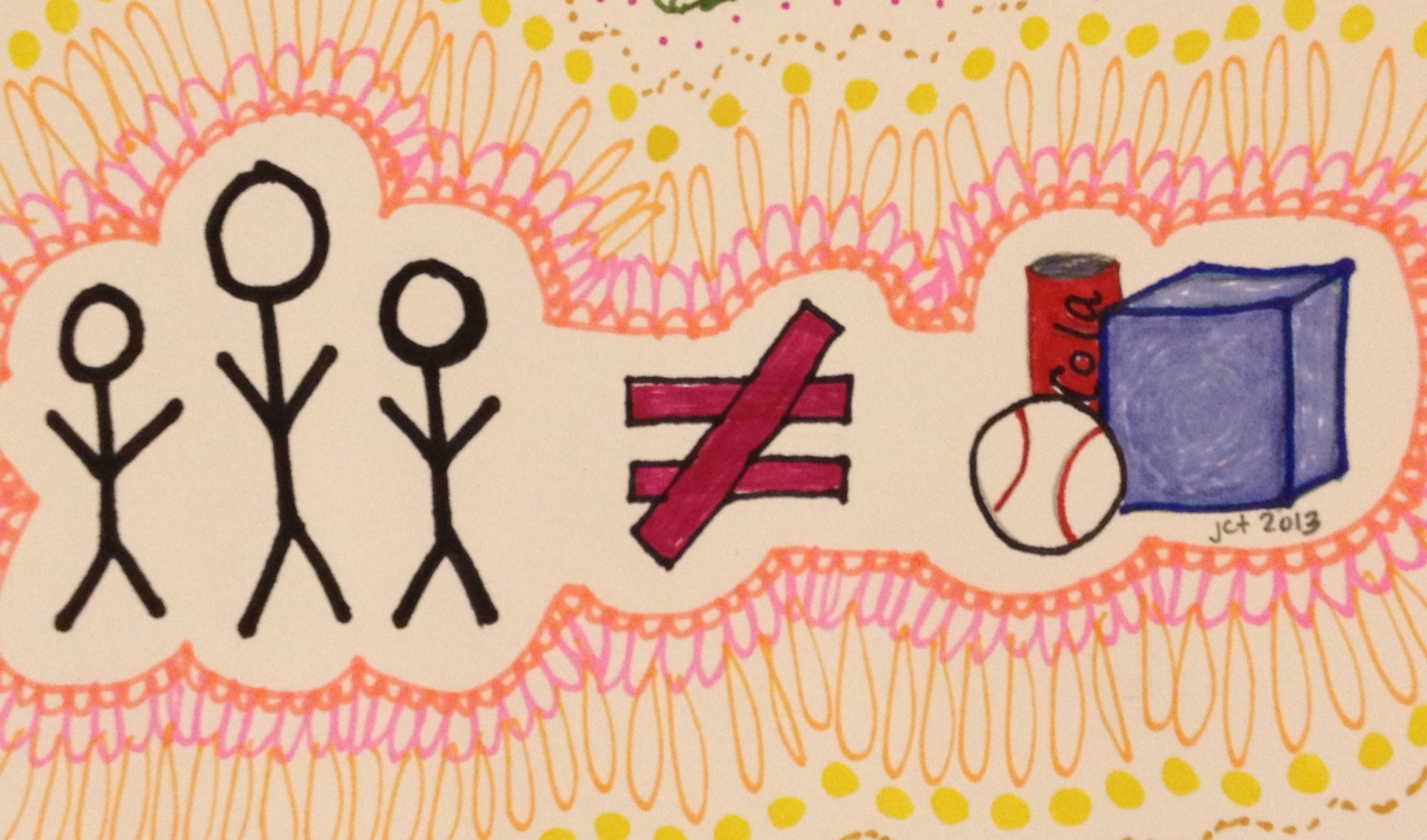
Teaching kids that people are not objects can open a lot of conversations.

[Trigger Warning: Sexual abuse]

When I was in training to become a Lutheran Deaconess, one of the requirements was to learn about recognizing, responding to and preventing sexual abuse. It was my first real understanding of the dynamics of power and abuse. Now as a parent, I teach my child about abuse in age-appropriate ways so he develops healthy ideas about giving and receiving respect.

People Are Not Objects

It seems to me that a lot of abuse happens when people stop seeing others as people. In this distorted and sinful perception of others as objects, real people are beaten, bullied, and discarded at will.

But people are not objects! They are living beings with rights, needs, and feelings. All people are worthy of dignity and respect, no matter what!

Object Lessons

I often use the phrase, “people are not objects” when I talk with my son about abuse in all forms. It is simple to grasp, yet opens many conversations.

We discussed “people are not objects” in a simple form when my son was in preschool. “We do not hit other kids because they have feelings; it is okay to hit your punching bag because it does not have feelings.”

When he was in public school, together we attended a presentation about bully-prevention. Since then we continue to talk about how bullies treat other people like objects and that is wrong. We talk about ways to avoid being bullies as well as the importance of standing up for ourselves and others.

When my son told me that his peers referred to girls as “hotties,” I told him girls are not just things to be judged by their appearance. When we discussed this year’s Super Bowl ads, he said, “You probably don’t like that ad because it treats people like objects.”

Framework for the Future

These are just a few vignettes of the types of conversations we have. While we have never had to face the horror of serious abuse, we have been talking about milder forms for years now.

I have deliberately given him words to identify the problem with treating others as objects. The framework we’ve built can support our future conversations. As the threats and temptations get more serious, we can relate new concerns to established ideals.

I recognize that I can’t protect my child from every possible threat. And as time goes on, he will be responsible for the decisions he makes in how he treats others. Still, talking with him about it throughout his life is the best way I know to help him recognize, respond to and prevent abuse in all forms. These conversations are imporant because people are not objects.

The Power of Family to Shape Faith

20130430-231747.jpgHeather Caliri wrote a great post the other day about the power of family culture. Heather and her family live in Argentina. So powerful is their family culture, that her children, who are homeschooled, have been slow to learn Spanish (the local language).

She says she is not surprised, but she learned something else too:

The real lesson for me is the power of family to insulate you from the culture surrounding you. It’s almost complete. And that is both frustrating (for someone who was trying to immerse) and heartening (as a parent who loves being in a family).

She goes on to call family culutre a “super power”! Reading this got me thinking about the responsibility to use a “super power” for good.

One of the ways in which we can use the power of family culture is in passing on the Christian faith to our children. Many families may not realize the impact that their day-to-day family culture has on their children’s faith.

Church and Sunday school are only a couple of hours a week. If you think about it, that’s not that much exposure to the faith. But when the family culture is infused with faith-talk, praying for one another, and reading the Bible together, the potential impact is much greater.

A lot of my thinking on this has been influenced by Faith Inkubators. The church where I did my Deaconess internship used a lot of Faith Inkubators materials. One of the pastors there taught me a lot about the importance of equipping parents to “incubate” faith in the home.

On his blog, Faith Inkubators founder, Rich Melheim wrote a Top 40 Principles of Faith Inkubation. I’d like to highlight one of those principles:

19. 3/4 of your youth ministry must be committed to helping parents DO and BE who and what God once called them to do and be when they first held their child in their arms.

This is important because it calls the whole church to responsibility for helping families use their “super power” to pass on the faith to the next generation.

Some families naturally weave faith into the fabric of their family culture and that is wonderful. But in my experience as a church worker and being married to a pastor, a lot of families don’t know where to begin. Either way though, it is counter-cultural to raise children in the Christian faith and families need the support of their church to do it well. After all, every super hero needs a trusty side-kick.

What do you think helps families weave faith into their family culture? What best practices can churches do to support faith formation in the home?

My Son has Surpassed Me

20130426-230602.jpgMy son loves history and geography. He and his dad, a serious history and geography buff, often discuss ancient civilizations and where in the world current events are happening.

When my son was quite young he started getting National Geographic Kids magazine. As his reading fluency increased he began pouring over each issue, regularly coming to me with fascinating facts about the wide world.

Lately he has even been reading the grown-up National Geographic magazine to which my husband is a long term subscriber. Somehow my son reading the big people’s version of the magazine on his own signifies to me that my baby is really growing up.

I mentioned before my distaste for trivia. While I don’t like trivia as a rule, some categories confound me more than others. I loath history and geography questions most of all.

See, not only is my baby growing up, but he is engaging subjects that baffle me. It’s a little intimidating having my 9 year old boy delve into topics that I take only in measured doses.

I knew this time would come, the time when my son would surpass me. I am glad he has a dad who can dive into this stuff with him because I just can’t.

I try not to let it get to me when my son is better than me at something. Rather than lamenting it, I delight in it. I rejoice that he is coming into his own and that my limitations aren’t holding him back.

This parenthood thing takes a careful blend of forming life-giving bonds and fostering healthy independence. I wonder at what point “holding on” is holding my child back. I worry over whether letting him try something hard on his own is letting him down.

But when my son so clearly distinguishes his interests, this I see as a gift. I don’t have to worry about my role when I know he is taking charge.

Even if a small part of me misses being more “in the know,” the greater part of me is glad I don’t have to know it all. Even more, his wide-eyed wonder about all things historical and geographical makes these topics more interesting to me than ever before!

Yes, my son has surpassed me in his love for history and geography, but I’m okay with that. If he asks me to play a game with him though, I will ask that it being anything but trivia.

Do I Don’t Know?

“Sweetie, where are my big orange-handled scissors?”

My son, absorbed in his latest movie obsession, absent-mindedly replied, “I don’t know.”

“You were the last one to use them. Do you remember where you left them?”

Again, “I don’t know.”

Did he really not know? How could he not know since he was the last one to use them? Did he even care that they were missing or that I needed them?

I never realized how irritating it is to hear, “I don’t know,” until my kid learned to say it a few years ago.

To be fair though, I have been guilty of it too.

“Mom, when are we going to go to the park?”

“I don’t know.”

I realize now that must’ve been annoying for him. Did I really not know? How could I not know when I was the mom? Did I even care how much it meant to him?

“I don’t know,” is all too often an answer of convenience. We can answer someone’s question without being bothered to engage the matter. We say, “I don’t know,” when we are busy or distracted. We often say it when we want the problem or even the person to just go away.

We may think we’re getting off easy when we just dismiss something with an, “I don’t know,” but it hurts when the implication is “I don’t care.”

I know this, I don’t want anyone in my life to think I don’t care. That’s why I’ve been trying to catch myself when I am tempted to say, “I don’t know.” I’ve been making a conscious effort to engage in the problem or question instead of dismiss it.

Instead of saying, “I don’t know,” now I say these types of things:

I bet the library would have a book about stinging insects.

I’ll look it up and let you know at next week’s Bible study.

Let’s ask Grandpa what kind of rock this is.

Have you checked under your bed?

The last place I remember seeing it was on the table when you were making stick puppets.

I need to give that some thought.

I have enjoyed varying my approach to things I don’t know, but changing what I say is not just about turning a phrase, it represents a shift in my attitude. I am not trying to brush people off or dismiss their concerns. I don’t want to irritate folks, I want to honor them. I want to show people that I care in how I respond.

Can I keep this up? I don’t know. I sure hope so because the people in my life are worth it.

What about you? Do you have patterns of talking about things that may be working against you in relationships? How do you show you care by how you listen and respond to the people in your life?