5 Reasons Being on the Fence is Hard

20130420-185555.jpg

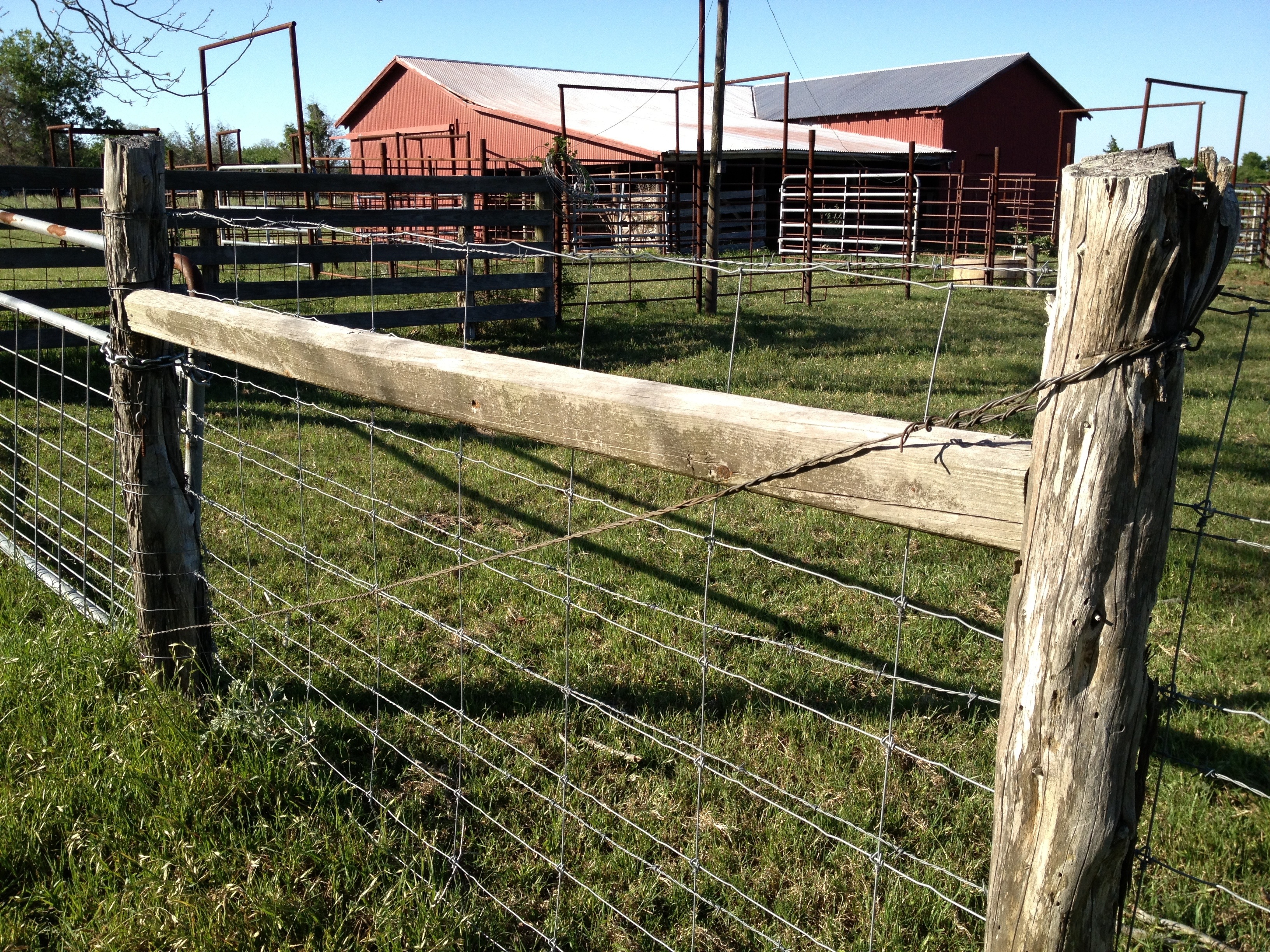
Have you ever been accused of being on the fence on a tough issue? People don’t realize how many of us there are because we’re not the ones making headlines. They also don’t realize being on the fence isn’t easy. Here are five reasons why being on the fence is harder than people think.

1. People Think We’re Just Sitting Here, Not Caring

The people on the extremes of an issue advocate legislation, push the envelope, and get noticed. Since we’re not in the public square making our position clear, they think we’re just sitting here on our fence, not caring about the issue at hand.

They imagine us here, blissfully unaware of the heated debate all around us. They think, because we haven’t chosen one side or the other, we simply don’t care. While that may be true for inconsequential matters, we do care about the big stuff. Its just that the way we care doesn’t look like the way an activist cares.

2. People Don’t Understand the Fence as a Position

People assume just because we haven’t chosen “either/or” we don’t have an opinion. They say we’re undecided. They don’t seem to appreciate that we chose the fence for a reason.

What they don’t realize is that we’re as passionate about the issue as they are. Our decision to take middle ground is often just as intentional as their choice to take a side. We’re not undecided, we have simply chosen a highly nuanced position somewhere in the middle.

3. Sometimes We Agree with Both Sides

Our nuance often comes from the reality that we can see merit on both sides of the issue. We think both camps have valid points and we take a position that embraces the best of both.

It’s hard to talk about the issue with people who want us to pick a side when we agree with them and their opponents. When we nod in agreement on their concerns and also nod with their opposition, they think we’re being disloyal.

4. Other Times We Disagree with Both Sides

On some issues our nuance comes from the conviction that both extremes are just wrong. We hear all the arguments on both sides and neither one seems a suitable option. We don’t pick one or the other because there just isn’t a good choice between them.

We take our perch on the fence because we find balance there, avoiding the muck on both sides. The trouble then is, we’re easy targets on that fence because we’re everyone’s opposition.

5. Some Fences Just Plain Hurt

Oh sure, some fences are sturdy and comfortable, but other fences are rickety or barbed. Being on the fence can be pleasant, but sometimes being on the fence itself is dangerous.

When the moderate position has its own dangers and difficulties, it can be tempting to just choose a side. Sometimes being on the fence hurts like barbed wire but we do it because we’re convinced that’s where we’re supposed to be.

What the Fence Could Be

Maybe if more people understood why being on the fence is so hard, they’d give us a break. Maybe if we could somehow articulate why we take the middle ground, they’d see that we care. And maybe if we could better communicate our nuanced view they might even help us bend back some barbs and join us on the fence.

Do you wish more people would take a nuanced view of controversial topics? Or are you on the fence about that?

Boston Marathon Helpers

20130401-183713.jpg

Today’s Tribute is for all those who helped in some way after the explosions at the Boston Marathon. These are a few of those stories.
 

This article from the Boston Globe describes individuals who helped runners who were unable to finish the race and separated from all their belongings:

Many (runners) were met with kindness from locals; offered blankets and jackets, cash and food, and a free place to sleep. “People in this city have been unbelievable,” said Glenn Sheehan, 50, a runner born in Wakefield and now lives in South Carolina. “ ‘Let me give you food, let me give you water’ — it’s been like that all afternoon.”

Forced from the race course at Massachusetts and Commonwealth avenues, 45-year-old Kathy Cote got a helping hand outside the Eliot Hotel.
“A very nice man offered me his jacket and his cellphone while he went into the Eliot and got me a blanket,” said Cote, a bartender from Mashpee running her second Boston Marathon, who was swept toward the Common by police with bullhorns.

The same article also says that one of the runners rerouted in an attempt to do some good:

Emily Clark, a Boston College junior, who was also forced to end her Marathon early, ran to Massachusetts General Hospital with two friends, intending to donate blood. Clark said hospital staff told her to come back Tuesday.

Another Boston Globe article talks about medical workers treating the injured in medical tents:

Alix Coletta, 26, a nurse in the medical tent, later told me she and others had treated dozens of people — including children — for severe trauma, massive bleeding, and heart problems.

Yet another article tells of the work of Boston area hospitals:

In all, eight Boston hospitals reported treating at least 144 patients, many in critical condition…Many of the hospitals activated long-held emergency plans, some calling in extra staff.

This article describes one way that Boston government officials were on the scene:

City officials set up a resource center for runners at the Park Plaza Castle. Late Monday night, Barbara Ferrer, head of the Boston Public Health Commission, said 50 people had arrived, looking for help finding loved ones or their belongings.

The mayor took time from his own hospital-stay as described in this article:

Mayor Thomas M. Menino was at Brigham and Women’s Hospital, ­recovering from surgery to repair a broken leg, when the news arrived…The mayor left the hospital and headed toward Copley Square, to meet with his aides and to brief the media.”

Finally, if you would like a visual sampling of Boston’s helpers, take a look at  this from The Atlantic Wire.

Even as we try to make sense of what has happened, as we pray for the injured and mourn those lost, we can find hope, as Mr. Rogers says, by looking for the helpers.

What stories have you heard about the helpers at the Boston Marathon?

Hello Anxious My Old Friend

20130414-220533.jpg

I usually only have one commitment on Sunday mornings, but this Sunday I had three things for which I was responsible. I kept meaning to fit preparation for those Sunday commitments into my week, but the week went by with very little progress on my Sunday prep. When Saturday finally rolled around I was anxious all day about what I had to do on Sunday.

They say that anxiety is closely linked with depression. I have a history of depression, dating back to my teen years. I sunk to rock-bottom depression in my early days post-partum and at some point after having my son the anxiety kicked in. I have been on and off meds, and in and out of therapy. (I mentioned before that my history of infertility is the biggest reason why I don’t have more than one kid, but this depression/anxiety stuff factors in pretty prominently too.)

I’m better nowadays than I was even a couple of years ago, but I feel like I am still not back to my pre-baby self. The depression doesn’t surface as often as it used to and the anxiety, well some days are better than others. I can attest to the two being in cahoots because when the anxiety does kick in the depression buries me.

It works like this, I get stressed out about something I have going on. I am aware of what needs done, I may even make small efforts to do some of it. Still I don’t get done what I know I should because I am too anxious. Then I get depressed about not getting things done and I get really down on myself. The less I do, the more anxious I become. The more anxious I become, the less I do. This has the appearance of unforgivable laziness. I call this my shut-down mode.

So, that was my Saturday. I felt the weight of all that was coming for Sunday and I shut down for most of Saturday. Somehow, I managed to get everything prepped that I needed to do for my Sunday commitments and you know what, it wasn’t that much to do after all. And you know what else? My Sunday went fine, I would even say it went well.

That’s the thing about this anxiety stuff, it’s just not rational. There was really nothing to be anxious about! I learned early on in my anxious days that I need to pick and choose my commitments and focus on things that I do well. Everything I committed to today is stuff I do well. Not to mention the fact that our congregation is a loving, gracious lot by which I need not feel afraid or intimidated.

I sometimes think about getting back on meds or getting back to therapy, but when I think about that I get really anxious…

Is Your Giftedness Too Obvious?

“People tell me I’m really good at this, but to me its no big deal.”

If you’ve found yourself saying something like this, then you’ve probably found something in which you are gifted.

20130412-003640.jpgFrom time to time I have led classes in the church to help people discover their unique God-given gifts. I love seeing people light up when they recognize their gifts and live more fully into who God has equipped them to be.

Sometimes churches struggle to fill slots and at the same time people in the church feel like their ideas and talents are overlooked. The church is stronger and better when people’s gifts are lifted up and they are free to exercise those gifts.

There are tools that we can use to help people discover their gifts. I often use the series from Stephen Ministries. I have used tools from other publishers as well, but I like the Stephen Ministries resources because they are very thorough.

As I teach about these gifts and guide people through discovery activities, sometimes people express concern that their gift isn’t unique. They tell me their results showed them something they already knew about themselves. Then they go on to say something to the effect of, “anybody can do that.” They discount the value of their gift because they assume it is universally practiced with ease.

The thing is though, the very thing you or I take for granted about ourselves is something that someone else struggles with. We may think something is easy or “no big deal.” The reason why we think something is easy is because that is what we are gifted in!

I encourage people to look around, ask around and reconsider their assumption that “anyone” can do what they are good at. Chances are good that when they talk to other people about it they’ll discover that not everyone can do it.

If something comes naturally, or seems “easy” to you, don’t overlook it. Embrace it as your gift.

A Simple Farm Girl Overcame Obstacles and Became a Leader in Her Field

20130409-205513.jpg

Welcome to “Tuesday Tributes,” a series for lifting up people who have impacted our lives. They may be our teachers, neighbors, parents, friends, or mentors.

Each Tuesday I will share a story about someone who has inspired me, mentored me in the faith, or shaped my character. Then you can tell your stories in the comments about someone who has impacted you in a similar way.

Today’s tribute is about my mother. There is so much I could say about my mom and how she has inspired me, but I just got back from her retirement party and I want to pay tribute to her career in particular.

My mother, Sharol Herr, was a career nurse and retired in February after 39 years. Her career was full of dedication to patients, interdisciplinary collaboration, and mentoring others in her field. My mother overcame obstacles to her dream of becoming a hospice nurse and became a leader in the field of hospice and palliative care.

My mother chose nursing at a time when it was one of only a handful of options available to aspiring professional women. As the first in her family to pursue education beyond high school, mom left the family farm to attend Mount Carmel College of Nursing in Columbus, OH. She got a nursing license and began working in the Mount Carmel Health System.

When I was in grade school my mother began seriously investigating her dream of becoming a hospice nurse. She hit a roadblock though; her basic nursing license was not enough.* Even as a kid I empathized with how hard it was for her. She wanted to be a hospice nurse so badly, but she wasn’t allowed because she wasn’t qualified with the education she had.

She was faced with a choice; she could ignore her dream or she could go back to school. She followed her passion and returned to the classroom. She continued working and took classes as she was able. My favorite times were when I got to go to class with her because I got to see her learning important things to fulfill her dream.

Eventually she got her bachelor’s degree and had a little more waiting to do before she finally got to fulfill her dream of becoming a hospice nurse with Mount Carmel Hospice. This much of her story alone blows me away because of the obstacles she overcame to get to that point. She was a simple farm girl who finished college while raising two children and got into her dream specialty.

Eventually mom went back to school again to enrich her mind and she got a master’s degree in counseling. She remained working at Mount Carmel Hospice.

Then the field of hospice began to expand. Hospice is part of a broader philosophy called palliative care which emphasizes comfort rather than cure and patient and family education to help cope with illness. Hospice is reserved for patients with a terminal illness, but palliative care can be applied in other situations as well. When Mount Carmel Hospice embraced this broader philosophy they became Mount Carmel Hospice and Palliative Care.

Mount Carmel became one of the first hospitals in the country to offer palliative care more broadly and my mother was part of the interdisciplinary team that pioneered it. Not only that but Mount Carmel became one of six hospitals in the nation to teach other hospitals how to develop their palliative care programs. My mother has taught about palliative care around the country. She also helped teach at and administer the teaching program for Mount Carmel.

That simple farm girl blushes when I talk about her being a pioneer and leader in her field, but this is my blog and I’m calling it like I see it. I am so proud of my mom’s amazing career. She inspires me to keep reaching for my own dreams.

*I just spoke with my mom and she clarified that getting her bachelor’s degree was a “self-imposed” limitation. All the same her degree was a great accomplishment and was a great asset in her career.
For more information about palliative care, visit Get Palliative Care.