Posts Tagged ‘Love Your Neighbor’

Life in the Spirit is Not a Game

“It can’t mean anything: going back to the selling game? It doesn’t mean anything. It can’t be the reason you’re here,” Mike says.

Ruby scoffs, “It’s a game whose rules I understand. And for a while at least, that’s just gonna have to be enough…It’s better than having no game at all.”

–Ruby in Paradise (R), 1993, Victor Nunez

A Game Whose Rules I Understand

I like to play games, lots of games. And I’m a bit of a strategist. I kind-of hate this about myself even while secretly plotting how I’m going to beat your pants off. I like to learn a game and study its rules so I can exploit weaknesses in the way the game is set up. By finding this advantage I can prevail against my opponent. Often times it gets chalked up to luck–everyone else thinks they played their best too, so I must’ve gotten lucky. But I know I found a way to gain the upper hand.

A game whose rules I understand is a game I can use to my own advantage.

In the same way, I think sometimes I have played at the 10 Commandments like they’re a game whose rules I understand. And if I can understand those rules, I can exploit even those.

The game I’ve played with God’s Law is the one where the rules are all very clear. So clear, in fact that I could do whatever I pleased and justify it on a technicality. Meanwhile I watched other players like a hawk, making sure they stayed in bounds.

No Game at All

The truth is, the commandments are just a glimpse, as in a mirror dimly, of what God wants for His people. I believe the commandments are worthwhile to teach and study. And I believe that the “spirit” of the commandments is so that all may go well with us (Deuteronomy 6:3).

But the commandments are not God. And following (or exploiting) them is not a game that we can ever, ever win. In fact, living out our faith is not a game at all.

Life in the Spirit is much better than a game.

Better than a Game

My husband has a way of playing games like there is actually something more important than the game itself. It drives me crazy really. He’ll get off on a tangent of conversation with other players just as I’m about to make a brilliant play!

He said once, “I don’t play games to beat people, I play games to be with people.”

And that’s just the thing–we don’t just play at life like its a cosmic game of winners and losers. Life in God’s created world is so much more than that.

In this life, we get to be in fellowship with the God who created us! We get to be in solidarity with all our neighbors on this planet! If commandments help us love and honor God and neighbor, then that is the most important thing. But when we become more worried about beating others or beating the game, then it’s time for a ‘Game Over.’

God With Us

20130906-175300.jpg
It’s easy to say and harder to do to live like people matter more than rules. I mean, I still get caught up in trivialities of board game strategies! So to think of people in day-to-day life as being more important than whatever other ‘game’ I’ve got going is also a challenge.

And since rules only tell us so much, God did something radical. God came to us, to be one of us, to be with us in Jesus. God in Christ showed us what it really means to “be with” rather than “beat.”

And Jesus, he’s a God whose love I can understand. And it his Spirit in me that empowers me to live in love with my neighbors. And love rules!

The Good News, Faith, and Works

20130803-075517.jpgI wrote the following in response to a discussion on Facebook about faith and works and decided to cross-post my thoughts here.

A person who is blessedly assured of the Gospel is more likely to have that bubble over in what we think of as works or fruits than someone for whom the perception of God’s judgment still looms.

Overflowing!

Thinking of a hierarchy of needs model, whenever we have our own needs taken care of, we are more able, willing, maybe even eager to address the needs of others. So having our need for the Gospel addressed, we naturally turn outward as expressed in works/fruits.

So then, works, in my view, are a natural overflowing of receiving the Good News (for we have received grace upon grace). A living, vibrant faith would naturally result in works just because God’s grace is just so huge that we can’t contain it!

Trying Too Hard

On the other hand, the person who perceives rightness with God as being in question may try to appease God with works to attempt to earn God’s favor. But this is all toil, no joy, and ultimately futile because God is not asking us to earn his favor (and we couldn’t even if he did). The works, in this case, are irrelevant, not at all indicative of a living faith, and powerless to save. Here the works themselves are dead.

Suspicion

But what about the person who claims to be a Christian but has no works/fruits to show for it? Is it fair to say that person’s faith is dead because there are no works/fruits to see there?

Perhaps.

But then, maybe not so fast.

A Closer Look

How do we know that someone has zero works/fruit? There may be lots of things done in secret that are works/fruits overflowing in that person’s life. Or maybe that person’s gifts are so very different than ours that the works/fruits look very different than our own. This is perhaps one of those times to be sure to put the best construction on our neighbor’s actions (Martin Luther’s Small Catechism, explanation of the 8th Commandment).

More Suspicion

Furthermore, what if there is a quantifiable dwindling of works or fruits in the life of a Christian? Do we leave that brother or sister for “dead” on account of a “faith” that lacks works?

I sure hope not, because sometimes, in the ebb and flow of life, our reserves get depleted. Sometimes we face challenges that require every ounce of grace we have for ourselves. We can’t bubble over at that time because we’re wrestling with God about our current state of affairs.

Drained to Death?

These crises of faith may lead to a scenario in which someone decides to abandon the faith altogether. But then, “Where shall I go from your Spirit? Or where shall I flee from your presence? If I ascend to heaven, you are there! If I make my bed in Sheol, you are there!” (Psalm 139:7-8) We may decide to walk away, but where could we possibly go that the Spirit of God will not continue to draw us with the Gospel?

Hope Beyond the Wilderness

Oftentimes though, the crises of faith, the wilderness times, lead us to a deepening of faith. Perhaps in the middle of it we “withdraw for a time” but that in itself can be a very faithful “work.” But even in this, it is God who is at work assuring us of the Gospel and replenishing us with his love. We can then emerge from the crisis of faith as even more joyful servants with a renewed vigor for the outward works/fruits for which we are freed and to which we are bound to do!

What do you think?

The More Different We Are, The More We Need Each Other

We need each other.

My heart aches for the polarization we have in our country and our church. Really I don’t mind the diversity of perspectives. In fact, a little part of me does a happy dance inside when people engage in respectful discourse. We need more of that because we need each other.

But do we know this? Do we know how much we need each other? I’m afraid we don’t. And the reason why I think we don’t know how much we need each other is because I hear more shouting than meaningful discourse. I see more protests than meetings of minds. And that is why my heart hurts.

What is at stake?

I wrote before about how I am on the fence about a lot of things. And it was sort-of a “woe is me” for being so misunderstood for seemingly not being able to take a stand. But really, I’m sorry for all of us because we’re missing out on what everyone has to offer when we draw lines, and take sides, and demonize everyone who is not and in our camp.

It’s that demonization, that dismissal of the other, that hurts everyone. Sometimes it’s mild enough. “I don’t really like what she says so I’m not going to friend her on Facebook.” Fine. We don’t have to be Facebook friends with everyone. But if we never listen to any of her ideas with an open mind–with a respect for her as a person who has a unique perspective because of where she’s been, who she has known, what she has read, if we dismiss her because something she said once turned us off, then we’re missing out.

Of course, there are more blatant ways that we demonize one another. I’ve heard Christians on
both sides of the marriage issue accuse opponents of not really reading their Bibles. The implication on hot topics is, if you really love Jesus you’ll see things my way. Pick a topic, any topic in which people are deeply divided, and you eventually hear an insistence that those other guys hate God.

But then, we hope to move forward to set policies and make laws. We try to gather enough power to steamroll the infidels in our way. Then, when we get our way, a remnant rises up on the other side. We fear them because what if they gain enough power to undo what we worked so hard to accomplish?

What Else Can We Do?

If we would listen to each other about these things, then our lives would be enriched, and our policies would be enhanced. Our opposition would be our allies and implementation would have widespread support.

Think I’m dreaming? Dream with me!

Last year I was on a task force for my Deaconess community to improve understanding of our decision-making process. A few years ago we took a bold step to stop operating by majority rule and instead to make decisions by consensus. And it is messy. Really messy. And we didn’t know what we were doing and sometimes people got hurt. And the more we did it the less we understood about how to do it well. But I had the stubborn conviction that it mattered very much that we learn to do it better. So I joined the task force and I studied my little head off about it. I’ve learned there are ways, good ways, tried-and-true methods of finding common ground and moving forward in an organization even when there is division.

The fundamental principle in the process of finding common ground is that each person is valuable. The experience and insights of everyone in the group should be honored. And we need to listen most and best to those whose opinions are least like our own. Special deference is even given to those whose ideas are most on the fringe of the group.

We need more of that kind of approach to issues where there is conflict. We need to value each other more than our own agendas. For instance, what might happen if we stop arguing about who should be allowed to get married and instead listen to each other’s wisdom? On the left, a gift you bring is the insistence that gay people are people, worthy of respect. and you make sure we know that their orientation should never be reason to cause them harm. On the right, a gift you bring is the reminder that there is something very sacred at stake–our bodies are temples. And even if you have to concede on something you’ll remind us that, regardless of orientation, promiscuity and infidelity hurt people.

These are gifts! And maybe the gift of people like me who are in the middle is to get everyone talking about how our gifts can inform our policies. I already hear widespread agreement about the points I mentioned. No one I know personally, on either side, says that gay bashing is okay. Also? No one I know personally promotes the idea that promiscuity or infidelity are healthy life choices.

So, what might we be able to agree upon that respects the gifts on each side? Let’s talk more about that because we need each other to move forward in a way that more of us can feel good about. I don’t know what that way forward would look like exactly because I don’t think we’ve ever quite had the discussion framed that way.

Dream with me.

But it’s not just the definition of marriage, there are lots of big issues that divide us. What would happen if we would pick an issue that we’re passionate about and set aside our agenda to see the gift that the other side brings? We’re not sure what that gift might be? Let’s have a loving, gracious, conversation with someone who disagrees. Let’s listen more than we talk. Let’s receive the passionate objection as a gift. And if the person is open to it, we too could share about the gift that we bring. Let’s talk together about where we agree and see where that gets us.

What might happen in all of our relationships if we listen to each other like this? We all have gifts to bring–and we need each other.

This post was included in Elizabeth Esther’s #TreasuryOfSmallBlogs in July 2014! Check out all ten in the treasury:


http://www.elizabethesther.com/2014/07/treasuryofsmallblogs-for-july-2014.html

Spiritual Growth Takes More Than “Just Add Water”

20130628-144715.jpgSummer is here and that means lots of free time for my dear son. So, the other day, he decided to try out some of his “grow animals.” Grow animals are these little encapsulated sponges that you put in water and they “magically” grow to be ten times their original size. Seeing these animals grow right before my very eyes got me thinking about our spiritual lives and how growth as a Christian doesn’t happen so easily.

What about Baptism?

As a good Lutheran, I am probably missing an opportunity to talk about the Sacrament of Baptism. We Lutherans are big on our Baptismal theology and teaching–through the waters of Baptism God adopts us as sons and daughters. Perhaps “just add water” could be a fun angle for a baptismal post.

But…

Living out our faith day in and day out, growing in Christ throughout our lives over time, is not something that just happens right before our very eyes. We can’t just add water and experience phenomenal growth in minutes. The truth is that even my son’s “grow animals” took more like days than minutes to reach their 10x growth potential.

What is involved with spiritual growth?

Spiritual growth, the ways we learn to rely more upon God and be more like Jesus in how we love our neighbors, involves:

  • God’s love and action for us first and foremost. Our growth in faith is an outgrowth of our trust in what God has first done for us through the life, death and resurrection of Jesus Christ.
  • Showing up. How do we “show up” in our spiritual lives? By going to worship–hearing God’s Word and receiving the Sacraments. We also show up through spiritual disciplines like prayer and Bible study. Showing up at worship and spiritual disciplines gives us opportunities to connect with God which helps us grow in our faith and trust in God.
  • Spending time with fellow Christians and learning together how to best live our lives as the Body of Christ. By being with others who are also trying to live this out and grow in faith, we can share ideas and offer support when needed.
  • Practice over time. Growing in our spiritual lives doesn’t just happen in days or weeks, it takes months and years and decades. It is something that happens over the course of our entire lives.
  • Patience & learning from messes. Sometimes, maybe more often than any of us really want to admit, we mess up. We fail in some way to live up to the name of Christ. Sometimes Christians give Christianity a bad name. It is sad, but true. Instead of wallowing in our messes, we can learn from them and let those lessons become part of our growth.
  • Saying we’re sorry. When we do make messes, it is important to acknowledge them, and to say we’re sorry–to God and to those we’ve harmed. It is difficult for anyone to move forward when messes are left messy.

God is doing it!

Yes, growing in our faith is more complicated than “just add water.” But I do not intend for this list to be a legalistic checklist of whether we’re doing our faith-living right. This is merely descriptive of the types of experiences that contribute to our spiritual growth. Our spiritual growth does not happen on our own. It is not something we have to do for ourselves to make God love us, it is something that God works in and through us. May we each experience God’s love more deeply in our lives as we seek to grow in our love for God and our neighbors.

What do you think? Is there anything you would add to the list of what is involved in spiritual growth? What has helped you grow in your faith?

——-

If you enjoyed this post about spiritual growth, you may also appreciate the follow up post titled Let’s Talk About Spiritual Shrinking As Well As Spiritual Growth (click the title to read the post).

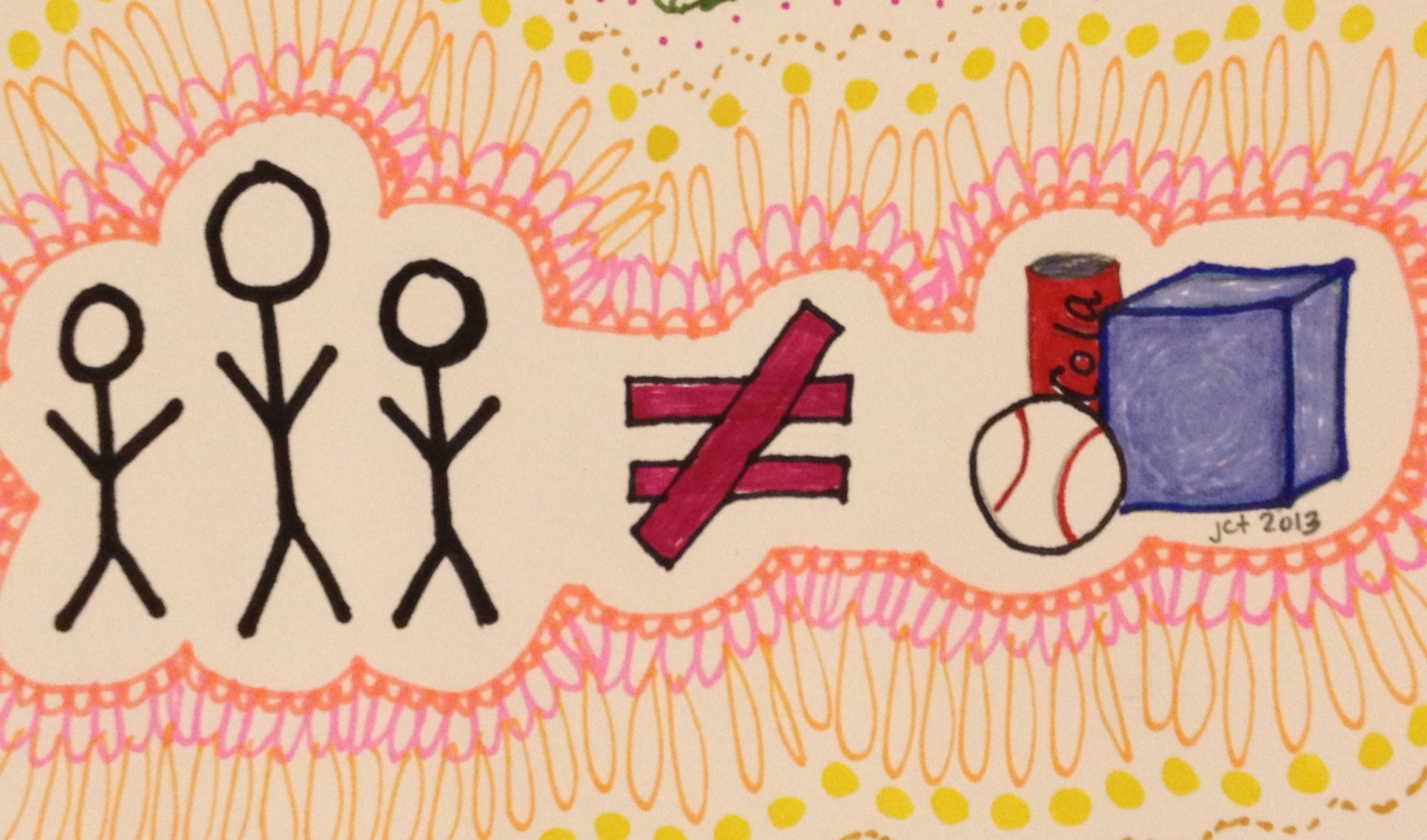
Teaching Kids that People Are Not Objects

Teaching kids that people are not objects can open a lot of conversations.

[Trigger Warning: Sexual abuse]

When I was in training to become a Lutheran Deaconess, one of the requirements was to learn about recognizing, responding to and preventing sexual abuse. It was my first real understanding of the dynamics of power and abuse. Now as a parent, I teach my child about abuse in age-appropriate ways so he develops healthy ideas about giving and receiving respect.

People Are Not Objects

It seems to me that a lot of abuse happens when people stop seeing others as people. In this distorted and sinful perception of others as objects, real people are beaten, bullied, and discarded at will.

But people are not objects! They are living beings with rights, needs, and feelings. All people are worthy of dignity and respect, no matter what!

Object Lessons

I often use the phrase, “people are not objects” when I talk with my son about abuse in all forms. It is simple to grasp, yet opens many conversations.

We discussed “people are not objects” in a simple form when my son was in preschool. “We do not hit other kids because they have feelings; it is okay to hit your punching bag because it does not have feelings.”

When he was in public school, together we attended a presentation about bully-prevention. Since then we continue to talk about how bullies treat other people like objects and that is wrong. We talk about ways to avoid being bullies as well as the importance of standing up for ourselves and others.

When my son told me that his peers referred to girls as “hotties,” I told him girls are not just things to be judged by their appearance. When we discussed this year’s Super Bowl ads, he said, “You probably don’t like that ad because it treats people like objects.”

Framework for the Future

These are just a few vignettes of the types of conversations we have. While we have never had to face the horror of serious abuse, we have been talking about milder forms for years now.

I have deliberately given him words to identify the problem with treating others as objects. The framework we’ve built can support our future conversations. As the threats and temptations get more serious, we can relate new concerns to established ideals.

I recognize that I can’t protect my child from every possible threat. And as time goes on, he will be responsible for the decisions he makes in how he treats others. Still, talking with him about it throughout his life is the best way I know to help him recognize, respond to and prevent abuse in all forms. These conversations are imporant because people are not objects.