Archive for the ‘Brokenness’ Category

Finding My Voice, or Getting Laryngitis?

laryngitisI have a confession to make: blogging is way harder than I expected it to be. A lot of great writing advice suggests blogging is a good way to find your voice. I want to find my voice, but keep coming up with laryngitis.

I wouldn’t call it writer’s block, it’s not that I can’t think of anything to write. I have plenty to write about, that’s part of why I started this thing. There’s a lot more tumbling around in my brain than is turning up onscreen.

It’s not a time factor either. My son is old enough to entertain himself for a while if I need to write. My husband is very supportive of me writing. I am aware of the time-killers in my life, now more than ever, and set them aside at will so I can write.

It’s not that I can’t write. There’s always room for improvement, but I I think I do alright with the basic mechanics of writing. Constructing a sentence or forming a paragraph are not my top worries when it comes to blogging.

Why Laryngitis Explains it Best

My trouble with blogging is much like suffering from a case of laryngitis when my favorite hymn is played in church. My heart swells with all the emotion that song evokes for me, but I can’t sing because I’ve lost my voice.

Likewise with blogging, when I actually sit down to write, I just can’t get the words out. Even when I have something really meaningful on my heart to write about, I get bogged down when I try to put it into a blog post.

I think the public nature of the blog intimidates me a little. I mean, people are reading what I put out here. It may or may not be all that many people just now. Still, thinking that others can access what I write at the click of an URL sometimes messes with my head.

Values competing in my thoughts sometimes distort what I want to say. For instance, I often try to “put things in the positive,” emphasizing what is possible or permitted rather than what is discouraged or denied. Yet, sometimes the clearest way to state something is to use a “negative” message. (“Don’t play in the street” is much more to-the-point than offering, “You can play in the lawn or on the driveway.”) The inner debate about how to approach a subject stifles my ability to just write.

Uncertainty about who my audience is challenges me on decisions about what to write or how to frame a post. Maybe if I was more specific about who I want my target audience to be, it would be easier to decide. Even when I resolve to answer that question, I have different ideas about who I hope to reach.

The Cure and Certain Hope

I suppose the cure for this bloggy laryngitis is similar to the cure for ordinary laryngitis: communicate the best I can right now and don’t overstress what voice I have. Like the patience required to wait out true laryngitis, I need to be patient with this phase of writing. How long will it take me to truly find my voice? I can’t say. But laryngitis always passes and I know this will too.
5 Reasons Being on the Fence is Hard

20130420-185555.jpg

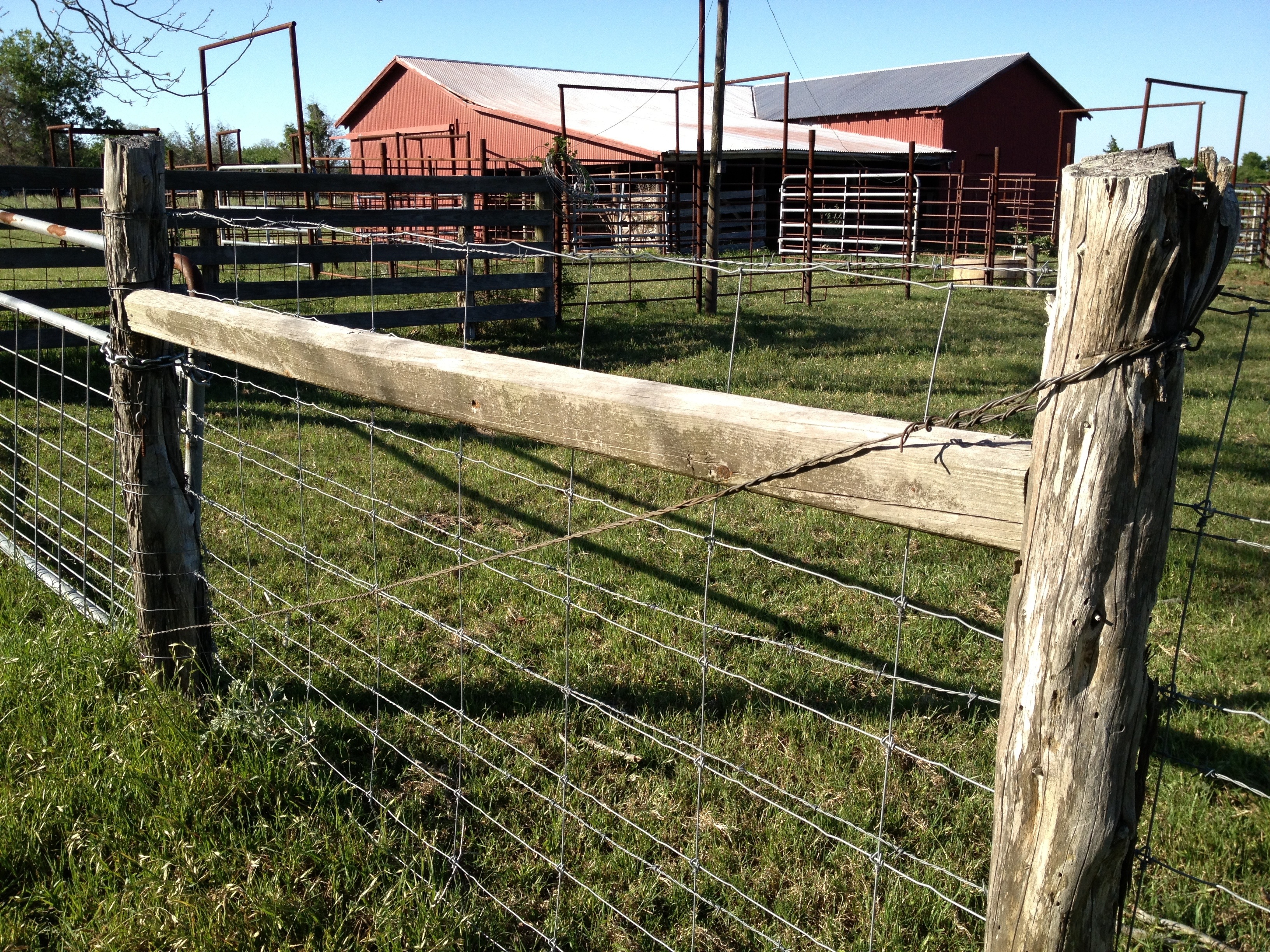
Have you ever been accused of being on the fence on a tough issue? People don’t realize how many of us there are because we’re not the ones making headlines. They also don’t realize being on the fence isn’t easy. Here are five reasons why being on the fence is harder than people think.

1. People Think We’re Just Sitting Here, Not Caring

The people on the extremes of an issue advocate legislation, push the envelope, and get noticed. Since we’re not in the public square making our position clear, they think we’re just sitting here on our fence, not caring about the issue at hand.

They imagine us here, blissfully unaware of the heated debate all around us. They think, because we haven’t chosen one side or the other, we simply don’t care. While that may be true for inconsequential matters, we do care about the big stuff. Its just that the way we care doesn’t look like the way an activist cares.

2. People Don’t Understand the Fence as a Position

People assume just because we haven’t chosen “either/or” we don’t have an opinion. They say we’re undecided. They don’t seem to appreciate that we chose the fence for a reason.

What they don’t realize is that we’re as passionate about the issue as they are. Our decision to take middle ground is often just as intentional as their choice to take a side. We’re not undecided, we have simply chosen a highly nuanced position somewhere in the middle.

3. Sometimes We Agree with Both Sides

Our nuance often comes from the reality that we can see merit on both sides of the issue. We think both camps have valid points and we take a position that embraces the best of both.

It’s hard to talk about the issue with people who want us to pick a side when we agree with them and their opponents. When we nod in agreement on their concerns and also nod with their opposition, they think we’re being disloyal.

4. Other Times We Disagree with Both Sides

On some issues our nuance comes from the conviction that both extremes are just wrong. We hear all the arguments on both sides and neither one seems a suitable option. We don’t pick one or the other because there just isn’t a good choice between them.

We take our perch on the fence because we find balance there, avoiding the muck on both sides. The trouble then is, we’re easy targets on that fence because we’re everyone’s opposition.

5. Some Fences Just Plain Hurt

Oh sure, some fences are sturdy and comfortable, but other fences are rickety or barbed. Being on the fence can be pleasant, but sometimes being on the fence itself is dangerous.

When the moderate position has its own dangers and difficulties, it can be tempting to just choose a side. Sometimes being on the fence hurts like barbed wire but we do it because we’re convinced that’s where we’re supposed to be.

What the Fence Could Be

Maybe if more people understood why being on the fence is so hard, they’d give us a break. Maybe if we could somehow articulate why we take the middle ground, they’d see that we care. And maybe if we could better communicate our nuanced view they might even help us bend back some barbs and join us on the fence.

Do you wish more people would take a nuanced view of controversial topics? Or are you on the fence about that?

Boston Marathon Helpers

20130401-183713.jpg

Today’s Tribute is for all those who helped in some way after the explosions at the Boston Marathon. These are a few of those stories.
 

This article from the Boston Globe describes individuals who helped runners who were unable to finish the race and separated from all their belongings:

Many (runners) were met with kindness from locals; offered blankets and jackets, cash and food, and a free place to sleep. “People in this city have been unbelievable,” said Glenn Sheehan, 50, a runner born in Wakefield and now lives in South Carolina. “ ‘Let me give you food, let me give you water’ — it’s been like that all afternoon.”

Forced from the race course at Massachusetts and Commonwealth avenues, 45-year-old Kathy Cote got a helping hand outside the Eliot Hotel.
“A very nice man offered me his jacket and his cellphone while he went into the Eliot and got me a blanket,” said Cote, a bartender from Mashpee running her second Boston Marathon, who was swept toward the Common by police with bullhorns.

The same article also says that one of the runners rerouted in an attempt to do some good:

Emily Clark, a Boston College junior, who was also forced to end her Marathon early, ran to Massachusetts General Hospital with two friends, intending to donate blood. Clark said hospital staff told her to come back Tuesday.

Another Boston Globe article talks about medical workers treating the injured in medical tents:

Alix Coletta, 26, a nurse in the medical tent, later told me she and others had treated dozens of people — including children — for severe trauma, massive bleeding, and heart problems.

Yet another article tells of the work of Boston area hospitals:

In all, eight Boston hospitals reported treating at least 144 patients, many in critical condition…Many of the hospitals activated long-held emergency plans, some calling in extra staff.

This article describes one way that Boston government officials were on the scene:

City officials set up a resource center for runners at the Park Plaza Castle. Late Monday night, Barbara Ferrer, head of the Boston Public Health Commission, said 50 people had arrived, looking for help finding loved ones or their belongings.

The mayor took time from his own hospital-stay as described in this article:

Mayor Thomas M. Menino was at Brigham and Women’s Hospital, ­recovering from surgery to repair a broken leg, when the news arrived…The mayor left the hospital and headed toward Copley Square, to meet with his aides and to brief the media.”

Finally, if you would like a visual sampling of Boston’s helpers, take a look at  this from The Atlantic Wire.

Even as we try to make sense of what has happened, as we pray for the injured and mourn those lost, we can find hope, as Mr. Rogers says, by looking for the helpers.

What stories have you heard about the helpers at the Boston Marathon?

Hello Anxious My Old Friend

20130414-220533.jpg

I usually only have one commitment on Sunday mornings, but this Sunday I had three things for which I was responsible. I kept meaning to fit preparation for those Sunday commitments into my week, but the week went by with very little progress on my Sunday prep. When Saturday finally rolled around I was anxious all day about what I had to do on Sunday.

They say that anxiety is closely linked with depression. I have a history of depression, dating back to my teen years. I sunk to rock-bottom depression in my early days post-partum and at some point after having my son the anxiety kicked in. I have been on and off meds, and in and out of therapy. (I mentioned before that my history of infertility is the biggest reason why I don’t have more than one kid, but this depression/anxiety stuff factors in pretty prominently too.)

I’m better nowadays than I was even a couple of years ago, but I feel like I am still not back to my pre-baby self. The depression doesn’t surface as often as it used to and the anxiety, well some days are better than others. I can attest to the two being in cahoots because when the anxiety does kick in the depression buries me.

It works like this, I get stressed out about something I have going on. I am aware of what needs done, I may even make small efforts to do some of it. Still I don’t get done what I know I should because I am too anxious. Then I get depressed about not getting things done and I get really down on myself. The less I do, the more anxious I become. The more anxious I become, the less I do. This has the appearance of unforgivable laziness. I call this my shut-down mode.

So, that was my Saturday. I felt the weight of all that was coming for Sunday and I shut down for most of Saturday. Somehow, I managed to get everything prepped that I needed to do for my Sunday commitments and you know what, it wasn’t that much to do after all. And you know what else? My Sunday went fine, I would even say it went well.

That’s the thing about this anxiety stuff, it’s just not rational. There was really nothing to be anxious about! I learned early on in my anxious days that I need to pick and choose my commitments and focus on things that I do well. Everything I committed to today is stuff I do well. Not to mention the fact that our congregation is a loving, gracious lot by which I need not feel afraid or intimidated.

I sometimes think about getting back on meds or getting back to therapy, but when I think about that I get really anxious…

Is it Really Good Enough?

Yesterday my friend Sarah Bessey shared a link to a guest post by Tara Livesay over at D.L. Mayfield’s blog. In the post Tara Livesay talks about her life in Haiti and her concern about visitors who come for mission trips.

Tara laments the tendency of visitors to view themselves as the heroes and to look at the people of Haiti as “projects.” She writes about the air of superiority and even the disdain with which some visitors view the people of Haiti.

Tara says,

It is not at all unusual to hear visitors botch something up they are working on and say, “Oh well, it is good enough for Haiti.”

That post hit me right between the eyes, because I was one of those visitors. When I was 17 years old (over half my lifetime ago), I went on a week-long mission trip to Haiti.

I know I went there thinking I was going to be a hero. The real truth of that trip is that the people of Haiti made more of an impact on me than I did on them.

When it came down to it, I avoided the hardest work projects because they were too hard. Even when I did help out with doable things, I remember just feeling hot all the time.

My half-baked efforts were far from “good enough for Haiti.” The “project” was too much for me. I failed it.

The only good I did in Haiti was when I joined in their singing. I was terrible at it because I was unsure of the words, their meaning and their pronunciation.

20130405-160409.jpgWhen we gathered with Hatian churches or Haitian school children, there was so much singing. Their singing was so joyful, so exuberant. They knew the words even if I didn’t.

I eeked out the words the best I could manage. And the best thing about singing with them was that it was with them. It wasn’t something I did for them because I was better. It was something we did together.

I still remember some of those songs and I still sing them from time to time. It is part of the lasting impact that the people of Haiti have had on me.

Still, I think part of me has carried a sense of failure that I didn’t make the impact on Haiti that I intended.

My son was in public school when Haiti had been devastated by the earthquake. So I dusted off my photo album from Haiti, made a slide show and spoke to my son’s class. I wanted to do something helpful, to Raise Awareness.

Now though, after reading Tara Livesay’s post I wonder if my little talk only perpetuated the “we as heroes” narrative. Did I use that opportunity to make up for my failure at the “project” earlier in my life?

I started writing this post last night before I went to bed and I have been mulling it over all day. I want to be able to wrap it up in some meaningful conclusion. I can’t seem to do it though because Tara’s post has left me with more questions than answers.

Could it be that is a good thing?